

“Which fence is mine?” is one of the most common questions asked by homeowners, yet it is also one of the most misunderstood.
Over the past 35 years, we have seen seemingly straightforward fence replacements escalate into costly boundary disputes involving surveyors, solicitors and, in some cases, the courts. Before repairing, replacing or relocating a fence, it is essential to understand where the legal boundary lies and what evidence actually establishes ownership.
Contrary to popular belief, there is no legal rule stating that the fence on the left or right automatically belongs to you. This guide explains how boundary ownership is determined, the common misconceptions to avoid, and when professional advice can prevent a relatively minor disagreement becoming an expensive legal dispute.
Why Knowing Fence Ownership Matters
Most homeowners don’t think about fence ownership until an issue arises.
Perhaps a fence has been damaged in bad weather, you’re planning to replace it, or your neighbour believes you’re responsible for repairs.
Knowing who owns a boundary helps determine responsibility for repairs, maintenance and alterations. Establishing ownership before carrying out work can prevent unnecessary costs and avoid disputes with neighbours.
The Risks Of Incorrect Boundary Assumptions
A boundary disagreement is rarely just about replacing a fence. If ownership is incorrectly assumed, the consequences can become expensive and time-consuming.
Problems may include:
- Neighbour disputes that permanently damage relationships
- Solicitors’ fees and legal costs
- Injunctions preventing work from continuing
- County Court proceedings
- Adverse possession claims
- Delays when selling your property
- Reduced property value due to unresolved disputes
Establishing the legal position before carrying out work is almost always significantly cheaper than resolving a dispute afterwards.
Where Should You Look First?
One of the biggest misconceptions we see is homeowners relying on local myths or advice from friends.
The best place to start is always your property’s legal documentation.
Title Deeds
Older title deeds sometimes include boundary responsibilities using symbols known as T marks. A “T” usually indicates responsibility for maintaining that boundary, while an “H” can suggest shared responsibility.
Not every property includes these markings, so don’t worry if yours doesn’t.
Land Registry Documents
Land Registry records can also help, but it’s important to understand that title plans usually show general boundaries, not the exact position or ownership of every fence.
If you don’t already have copies of your property’s records, you can obtain them through HM Land Registry.
Common Misconceptions About Boundary Ownership
| Myth | Reality |
| The left fence is always mine | There is no legal rule stating this. |
| Land Registry plans show exact boundaries | Usually not. They normally show general boundaries only. |
| Fence ownership determines the legal boundary | Not necessarily. |
| Whoever paid for the fence owns the boundary | Usually irrelevant legally. |
| Replacing a fence changes ownership | No. Ownership does not change simply because a fence has been replaced. |
What If The Documents Don't Give You A Clear Answer?
This is more common than many people realise.
Sometimes title deeds don’t mention fences at all, while in other cases the information is unclear or incomplete.
Before replacing a fence or carrying out work, it’s worth establishing as much evidence as possible. We can help interpret title documents, review available plans and explain what the evidence does and doesn’t show.
You can find out more about how we help with these situations on our Party Wall & Boundary Disputes page.
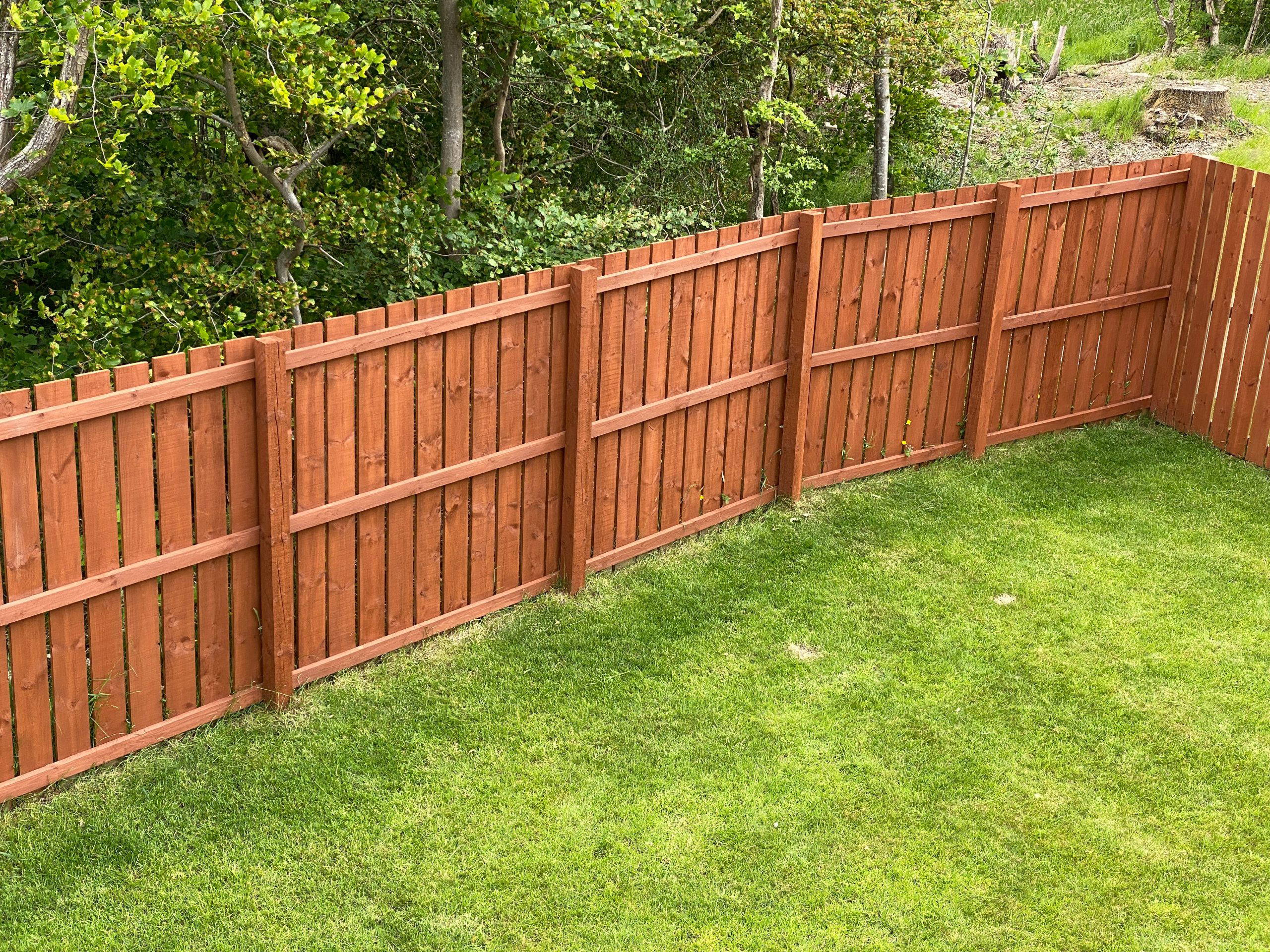
Can You Replace A Fence If You're Not Sure Who Owns It?
If ownership hasn’t been established, replacing a fence without discussing it with your neighbour can create unnecessary complications.
Questions often arise over who should pay, whether the replacement has altered the boundary or who owns the new fence.
If you’re in any doubt, it’s usually worth confirming ownership before work begins. A little clarity now can prevent a much larger dispute later.
When Does A Fence Issue Become A Boundary Dispute?
A disagreement about a fence isn’t always about the fence itself.
Often, the real issue is the position of the legal boundary.
For example, if a neighbour wants to move a fence during replacement work, even by a small distance, it can affect future property ownership and lead to more complex disputes.
If that happens, we can assess the available evidence and provide independent advice to help establish the boundary position before matters become more difficult to resolve.
If you’re already facing this situation, our guide on How to Win a Boundary Dispute explains the process in more detail.
When Should You Speak To A Chartered Surveyor?
Many questions about fence ownership can be answered by reviewing the available documents.
Professional advice is worthwhile if:
- ownership cannot be established
- you’re buying or selling a property
- you’re planning an extension
- you’re removing hedges or mature planting
- you’re replacing retaining walls
- your neighbour disputes the boundary
- title plans appear inaccurate or contradictory
- you’re planning significant landscaping close to a boundary
Early advice often prevents relatively minor disagreements becoming expensive legal disputes.

A Recent Boundary Dispute We Helped Resolve
To illustrate how boundary issues develop in practice, we recently advised a homeowner involved in a dispute over the position of a rear garden boundary. The neighbouring owner claimed that approximately four metres of land had been incorrectly retained and requested that the existing fence line be moved.
Although the disagreement initially appeared to relate to the fence, the underlying issue was the legal boundary position. This introduced potential risks including loss of land, legal costs and delays if the matter escalated.
Our role was to establish the position based on objective evidence. We carried out a detailed review of Land Registry title plans, inspected the site and existing boundary features, analysed a measured topographical survey and compared all available historical documentation.
Following our investigation, we concluded that the existing fence line aligned with the registered boundary within accepted tolerances, and there was no evidence to support the neighbouring owner’s claim. We prepared an independent Expert Report, providing our client with a clear, evidence-based position for negotiation, helping to resolve the matter without immediate legal escalation.
Boundary disputes are rarely about fences alone. Without proper investigation, assumptions can quickly lead to costly and time-consuming outcomes. A structured, evidence-led approach allows homeowners to understand their position and move forward with confidence.
For a more detailed example, you can view our full case study here: Party Wall Award & Boundary Dispute Case Study.
Alternatively, you can read our downloadable PDF detailing how we resolved a complex residential boundary dispute.
Professional Advice On Boundary & Fence Disputes
If you’re unsure where your responsibilities lie, planning work close to a boundary or trying to resolve a disagreement with a neighbour, we’re here to help.
Our chartered surveyors can explain the available evidence, answer your questions and help you move forward with confidence.
Learn more about our Party Wall & Boundary Disputes service, read more About Us, or contact us to discuss your situation.